12-3-30 Workout: Calories Burned, Benefits & Beginner Guide
The 12-3-30 workout went viral because it is easy to remember and easy to start: set a treadmill to a 12% incline and 3 mph, then walk for 30 minutes. But how many calories does it actually burn, what incline should a beginner use, and what happens if you hold the handrails? Here are the numbers and the safety points.

Contents
What Is the 12-3-30 Workout?
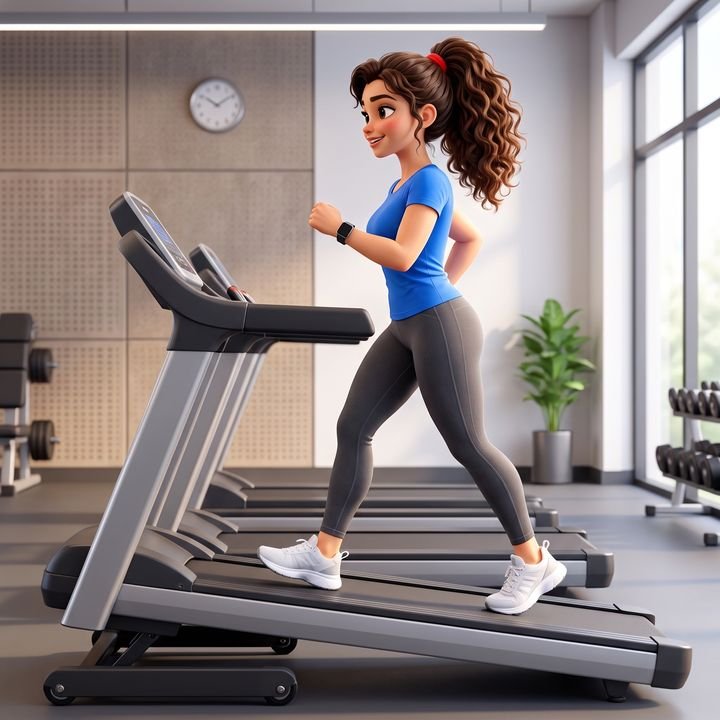
The 12-3-30 workout is a 30-minute treadmill walk at a 12% incline and a speed of 3 mph (about 4.8 km/h). The name is simply the three settings in order: 12 for incline, 3 for speed, 30 for minutes. It is a walk, not a run, which is part of its appeal.
Lauren Giraldo is generally credited with creating it, and it spread widely through social media (Livestrong and Know Your Meme report slightly different dates for when it first appeared). It came from personal experience rather than a research study, so the numbers are a handy routine, not a scientifically optimal prescription.
What Each Number Means
12: the treadmill slope, set to 12%. 3: belt speed of 3 miles per hour. Most Australian treadmills show km/h, so set 4.8 km/h. 30: minutes at those settings, usually after a short warm-up.
How Many Calories Does the 12-3-30 Workout Burn?
We estimate this with the ACSM walking equation, the same formula used in our incline treadmill calorie calculator. It adds the cost of moving forward to the cost of climbing the grade. For a 70 kg person at 4.8 km/h, 12% incline and 30 minutes, the result is about 302 calories (roughly 1,264 kJ).
| Body weight | Estimated calories (30 min) | Approx. kJ |
|---|---|---|
| 55 kg | ~237 | ~993 |
| 65 kg | ~281 | ~1,174 |
| 70 kg | ~302 | ~1,264 |
| 75 kg | ~324 | ~1,355 |
| 80 kg | ~345 | ~1,445 |
| 90 kg | ~389 | ~1,626 |
| 100 kg | ~432 | ~1,806 |
Worked Example (70 kg)
How Much Does Incline Change the Burn?
Incline is the reason this workout burns noticeably more than a flat walk at the same speed. Here is the same 70 kg person at 4.8 km/h for 30 minutes at different slopes.
| Incline | Estimated calories (70 kg, 30 min) | Compared with flat |
|---|---|---|
| 0% | ~121 | — |
| 3% | ~166 | +38% |
| 5% | ~196 | +63% |
| 8% | ~242 | +100% |
| 10% | ~272 | +125% |
| 12% | ~302 | +150% |
| 15% | ~348 | +188% |
Going from flat to 12% raises the estimated calorie cost to roughly 2.5 times, without increasing speed. That is why many people who find running hard on the joints like incline walking as a lower-impact way to raise effort.
Handrails, Posture and Form
The estimate above assumes you carry your own body weight. Holding the rails can lower the real cost. In a small 2014 study of walking at 5% and 10% inclines, holding on and leaning back reduced energy expenditure significantly, while holding on and staying upright did not at 10% incline (International Journal of Exercise Science). Because the study was small, treat it as a guide, not a precise number.
Practical Tips
Walk upright with a natural arm swing if you can. If you need to touch the rails for balance, keep your body upright rather than leaning back. If you cannot hold 12% without hanging on, lower the incline: a slightly lower slope done properly is better than a steep one done poorly.
Incline Walking Benefits
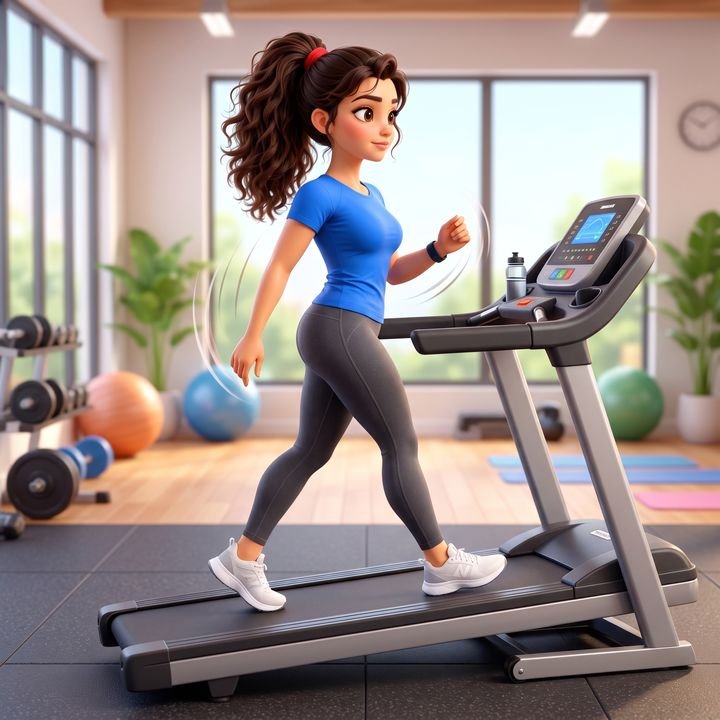
Incline walking raises effort compared with flat walking at the same speed, which can make a short session feel harder and use more energy. It is also lower impact than running, since one foot stays on the belt. Climbing tends to work the calves and glutes more than flat walking. Beyond that, the benefits are those of regular moderate exercise: general cardiovascular fitness and a contribution to your weekly activity. It does not remove fat from one body area, and it is not a replacement for strength training.
What Incline Should I Walk On a Treadmill?
If you are new to incline walking, do not start at 12%. Build up in stages and move on only when the current stage feels comfortable and you can still talk in short sentences.
| Stage | Incline | Speed | Suggested focus |
|---|---|---|---|
| 1 | 0 to 3% | Comfortable walking pace | Get used to the belt and walking without holding on |
| 2 | 4 to 6% | Same or slightly slower | Build calf and hip strength |
| 3 | 7 to 9% | 3 mph (4.8 km/h) or slower | Hold good posture for the full session |
| 4 | 10 to 12% | 3 mph (4.8 km/h) | Reach the full 12-3-30 settings |
Spend as long as you need at each stage. Use your target heart rate zones or the talk test to check effort.
Does Treadmill Incline Burn More Calories? 🔥 | Incline Calories Calculator
Our video on how treadmill incline changes the calories you burn, using the same Incline Treadmill Calorie Calculator described in this guide.
Video by MegaCalcOnline on YouTube. For general information only – not medical advice.
Is the 12-3-30 Workout Enough Exercise?
Thirty minutes is a useful block. Australia's physical activity guidelines for adults aged 18 to 64 suggest 150 to 300 minutes of moderate activity or 75 to 150 minutes of vigorous activity a week, plus muscle-strengthening activities on at least two days (Department of Health and Aged Care). Five sessions of 30 minutes add up to 150 minutes. Whether it counts as moderate or vigorous depends on how hard it feels to you. Add strength work as well; our guide to cardio vs weights explains how the two fit together.
What Equipment Do You Need?
You need a treadmill that actually reaches 12% incline and a speed of 4.8 km/h. Many walking pads do not have an incline function at all, so check the listing before buying. Our guide to the best walking pads in Australia notes which models list incline and how much. Also check the maximum user weight, the belt size and how much floor space you have. If you do not own a treadmill, a gym treadmill or a hilly outdoor walk is a reasonable alternative.
Who Should Be Careful?
Summary
The 12-3-30 workout is popular because it is simple, low impact and noticeably harder than a flat walk. Use the tables above to estimate your own calories, start at a lower incline if you are new, and check the numbers for your weight in the calculator.
🧮 Calculate Your 12-3-30 Calories
Enter your weight, speed, incline and time to see your own estimate in calories and kilojoules.
Open the Incline Treadmill Calorie Calculator →This article provides general health and fitness information only and is not a substitute for personalised advice from a doctor, accredited exercise physiologist or dietitian.
Frequently Asked Questions
What is the 12-3-30 workout?
The 12-3-30 workout is a treadmill walk at a 12% incline and 3 mph (about 4.8 km/h) for 30 minutes. It became popular on social media and is usually done as a walk rather than a run.
How many calories does the 12-3-30 workout burn?
Using the ACSM walking equation, a 70 kg person burns roughly 300 calories (about 1,260 kJ) in 30 minutes at 12% incline and 4.8 km/h. That is about 2.5 times the roughly 121 calories burned walking the same speed on flat ground. Your own figure depends on body weight and on whether you hold the handrails.
What incline should I walk on a treadmill if I am a beginner?
Start with a low incline, such as 0 to 3%, and increase gradually over several weeks as the effort feels manageable. Reaching 12% is a progression, not a starting point.
Is the 12-3-30 workout good for weight loss?
It can contribute to a calorie deficit because incline walking raises the energy cost of walking. Weight loss still depends on your overall energy balance over weeks, so treat it as one part of a routine, not a quick fix.
Can I do the 12-3-30 workout every day?
Many people do it several times a week, but there is no single right number. Build up slowly, watch for knee, ankle, Achilles and lower-back strain, and include rest days and strength work. If you have a health condition, check with your doctor first.