Waist-to-Hip Ratio: What It Means & How to Calculate It
Two people can share the exact same BMI and still carry very different health risk — because where your body stores fat matters as much as how much you carry. Waist-to-hip ratio is a simple tape-measure test that captures this, and it takes about 60 seconds.
Contents
What Waist-to-Hip Ratio Measures
Waist-to-hip ratio (WHR) is simply your waist circumference divided by your hip circumference. It's used as a proxy for where your body tends to store fat — more around the abdomen (an "apple" shape) versus more around the hips and thighs (a "pear" shape) — because that distribution pattern carries meaningfully different health implications even at the same total body weight.
How to Measure It Correctly
Accuracy depends almost entirely on measuring at the right spots, consistently:
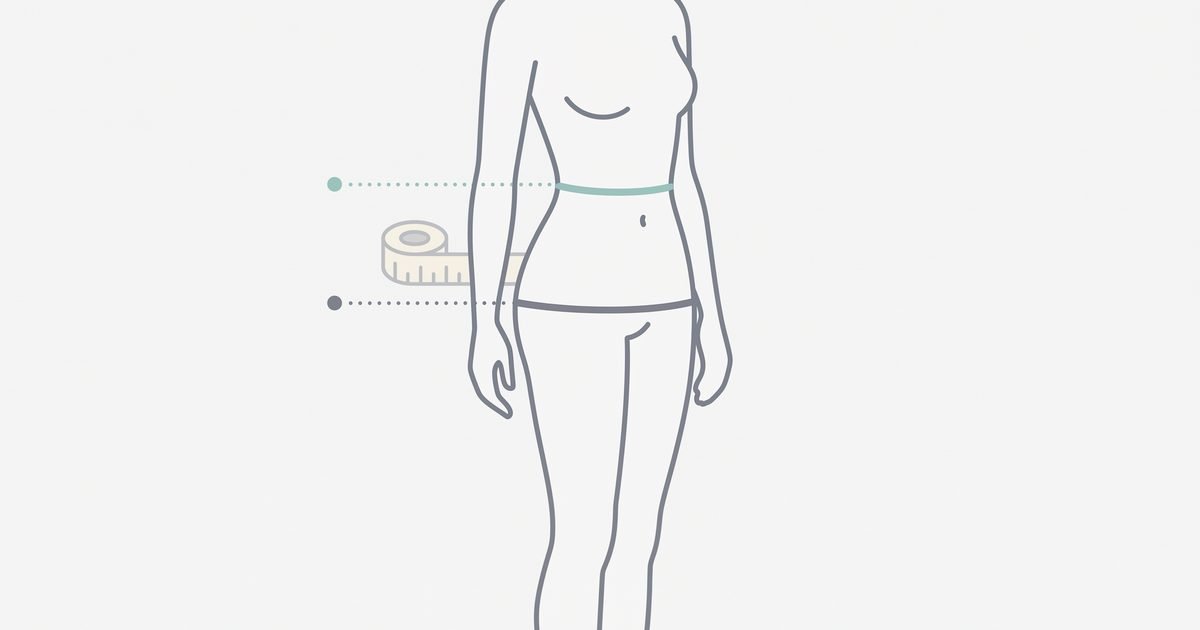
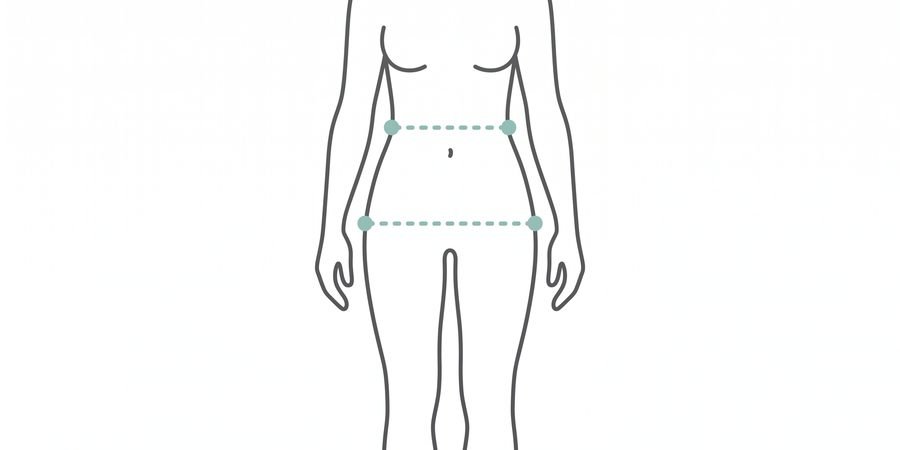
- Waist: measure at the narrowest point of your torso, usually roughly level with your belly button — not necessarily where your pants sit.
- Hips: measure at the widest point around your buttocks.
- Technique: use a soft, flexible tape measure, keep it level and snug against the skin without compressing it, and measure at the end of a normal exhale.
Worked Example
📏 Calculate Your Ratio
Enter your waist and hip measurements for an instant WHR result and risk category.
Open Waist-to-Hip Ratio Calculator →WHO Risk Categories by Sex
The World Health Organization's thresholds differ between men and women, reflecting typical differences in healthy fat distribution between the sexes:
| Sex | Low Risk | Moderate Risk | High Risk |
|---|---|---|---|
| Men | Below 0.90 | 0.90-0.99 | 1.00 or above |
| Women | Below 0.80 | 0.80-0.85 | Above 0.85 |
These are population-level guidelines rather than individual diagnoses — a ratio just above the threshold isn't an automatic red flag on its own, but it's a useful prompt to look at the fuller picture of your health alongside other markers.
Why It Can Matter More Than BMI Alone
BMI only accounts for weight relative to height — it has no way of knowing whether that weight sits mostly around the abdomen or mostly around the hips and thighs. Abdominal (visceral) fat is more metabolically active than fat stored elsewhere and is more strongly associated with cardiovascular and metabolic risk, which is why two people with an identical BMI can have genuinely different risk profiles.
Can You Lower Your Ratio?
General fat loss through a sustained, moderate calorie deficit combined with regular exercise tends to reduce abdominal fat preferentially for many people over time, which lowers both the waist measurement and the resulting ratio. There's no reliable way to "spot-reduce" fat from one specific area through targeted exercises alone — ab workouts build muscle underneath the fat but don't selectively burn the fat covering it.
Summary
Waist-to-hip ratio divides your waist measurement by your hip measurement to estimate where your body stores fat, with WHO high-risk thresholds of 1.00 for men and 0.85 for women. It complements rather than replaces BMI, and responds to the same general fat-loss strategies — sustained calorie deficit plus regular exercise — rather than targeted spot-reduction.
This article provides general health information only and is not a substitute for personalised advice from a doctor.
Frequently Asked Questions
What is a healthy waist-to-hip ratio?
The World Health Organization classifies a waist-to-hip ratio above 0.90 for men and above 0.85 for women as indicating high risk from central (abdominal) fat, with 0.90-0.99 (men) or 0.80-0.85 (women) considered a moderate-risk range. Below 0.90 (men) or 0.80 (women) is generally considered low-risk, though the ratio works best as one signal alongside other measures rather than in isolation.
How do you measure waist-to-hip ratio correctly?
Measure your waist at the narrowest point, usually just above the belly button, and your hips at the widest point around your buttocks, both with a soft tape measure snug but not compressing the skin. Divide the waist measurement by the hip measurement to get your ratio — for example, a 80cm waist and 100cm hips gives a ratio of 0.80.
Is waist-to-hip ratio better than BMI?
They measure different things rather than one being strictly better — BMI estimates overall body size relative to height, while waist-to-hip ratio specifically estimates fat distribution. Research suggests fat distribution (central vs peripheral) is an important independent predictor of cardiometabolic risk, which is why some clinicians use both measures together rather than relying on BMI alone.
Why does fat distribution matter for health risk?
Fat stored around the abdomen and organs (visceral fat) is more metabolically active and more strongly linked to cardiovascular and metabolic risk than fat stored around the hips and thighs (subcutaneous fat). Two people with the same BMI can have quite different health risk profiles depending on where their body stores fat.
Can you lower your waist-to-hip ratio?
Yes — general fat loss through a sustained calorie deficit combined with regular exercise tends to reduce abdominal fat preferentially in many people over time, which lowers the waist measurement and therefore the ratio. There's no reliable way to spot-reduce fat from one area only; it responds to overall body composition change.