What Is a Good Heart Rate Variability (HRV) Score?
Your smartwatch gives you an HRV number every morning, but doesn't tell you what to make of it. Unlike resting heart rate, there's no simple "Excellent / Good / Poor" scale for heart rate variability — and for good reason. Here's what the published research actually shows about typical ranges, and what matters far more than any single number.
Contents
What HRV (RMSSD) Actually Measures
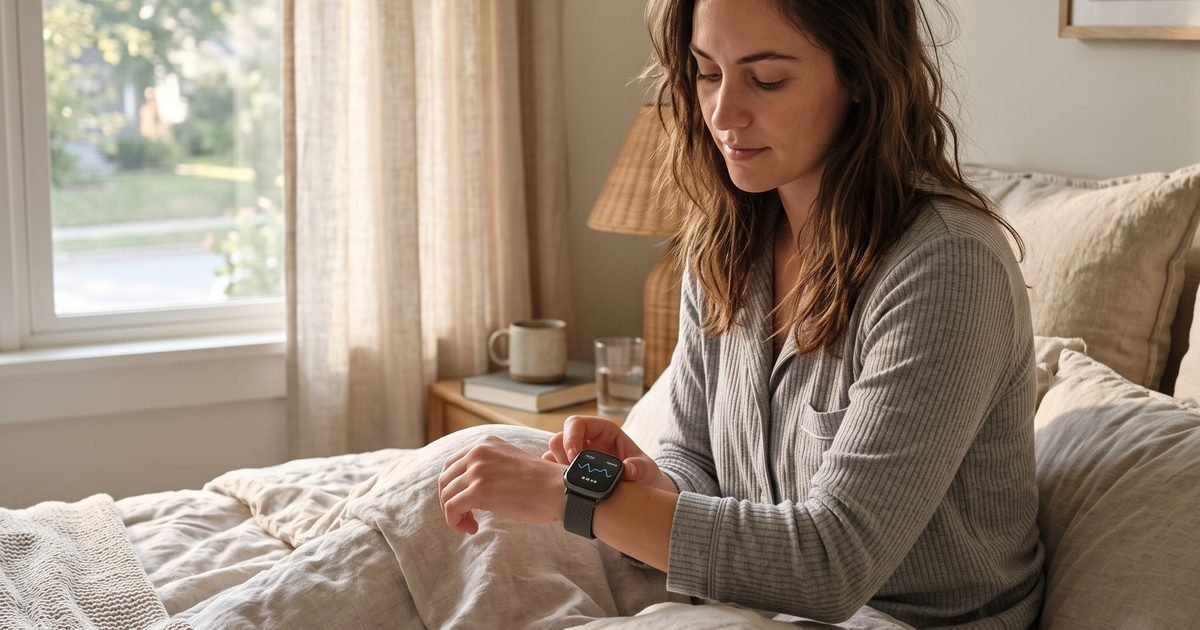
Heart rate variability is the natural, beat-to-beat variation in the time gap between your heartbeats — it's a different thing entirely from your heart rate itself. RMSSD (root mean square of successive differences) is the standard way wearables and chest straps summarise that variation into a single millisecond figure. Broadly, a higher RMSSD tends to reflect a nervous system leaning more toward rest and recovery, while a lower reading can reflect fatigue, stress, illness or under-recovery.
Reference Ranges by Age and Sex
The most reliable published reference values come from a large cohort study (Tegegne et al. 2020, European Journal of Preventive Cardiology, n=84,772), which measured resting RMSSD across age bands for men and women separately.
| Age Band | Men — Mean RMSSD | Women — Mean RMSSD |
|---|---|---|
| 20-24 | 57.3 ms | 64.7 ms |
| 30-34 | 45.4 ms | 51.6 ms |
| 40-44 | 35.2 ms | 41.0 ms |
| 50-54 | 28.7 ms | 31.8 ms |
| 65+ | 25.2 ms | 23.7 ms |
Two clear patterns: RMSSD declines steadily with age for both sexes, and women tend to run higher than men at younger ages — though that gap narrows and largely closes by the mid-50s.
🧮 Check Your Own RMSSD
Calculate your RMSSD and compare it to the full age-and-sex reference table.
Open HRV Calculator →Why There's No "Good" HRV Number
Resting heart rate has decades of tightly banded population data supporting clear, agreed fitness categories. HRV is a different beast. RMSSD varies hugely between two perfectly healthy people of the same age and sex — genetics, body composition, training history, breathing patterns and measurement conditions all shift the number by a wide margin. A "normal" figure for one person could be someone else's unusually low or high reading, despite both being perfectly healthy. On top of that, a single RMSSD reading is inherently noisy night to night, which is exactly why no major sports-science or cardiology body publishes a simple pass/fail HRV scale the way they do for resting heart rate.
Is Higher Always Better?
As a general rule, yes — higher RMSSD leans toward better short-term recovery and lower sympathetic ("fight or flight") dominance. But it's not an absolute rule at the individual level. Your own stable baseline matters more than comparing to anyone else's number, and a sudden one-day spike can simply reflect measurement noise rather than a genuine improvement. Extremely high readings in isolation aren't automatically a red flag either, though an unusual or sudden jump is worth noting alongside how you actually feel.
What Matters More Than the Number
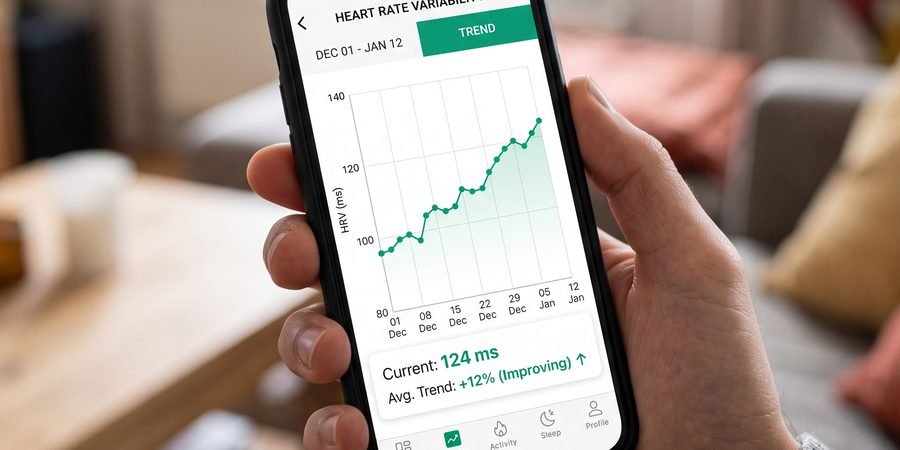
Because a single reading sits inside a wide band of natural day-to-day scatter, the far more useful habit is tracking a rolling 7-14 day average and watching for gradual, sustained shifts. Sleep, alcohol, training load, illness, stress and even your measurement time or body position can all move RMSSD meaningfully from one day to the next — none of that reflects a real change in your underlying health on its own.
Summary
A "good" heart rate variability score depends heavily on your age, sex, and — most of all — your own personal baseline. Published reference data shows clear patterns by age and sex, but the gap between equally healthy individuals is too wide for a simple grading scale. Your own RMSSD trend over one to two weeks tells you far more than any single reading compared to a population table.
This article provides general health and fitness information only and is not a substitute for personalised advice from a doctor or accredited exercise physiologist.
Frequently Asked Questions
What is a good heart rate variability score?
There isn't a single number that counts as good for everyone — RMSSD (the standard HRV measure) varies enormously between healthy people of the same age and sex. Published reference data shows a typical 30-34 year old man averaging around 45 ms, for example, but plenty of healthy people in that group sit well outside that figure in either direction. Your own trend over one to two weeks is far more meaningful than comparing a single reading to anyone else's number.
What is a normal heart rate variability range?
Normal ranges shift substantially with age: published reference data shows mean RMSSD around 57 ms for men aged 20-24, dropping to around 25 ms by 65+, with women generally running somewhat higher than men at younger ages. Because individual variation within any age band is so large, these are useful as rough context rather than a pass/fail range.
Does heart rate variability change with age?
Yes, consistently. Large reference studies show RMSSD declining steadily from the early 20s through to 65 and beyond, for both men and women. This reflects normal, well-documented changes in autonomic nervous system function with age rather than a sign of declining health in any one individual.
Is higher HRV always better?
Generally, a higher RMSSD reflects a nervous system leaning more toward rest and recovery, while a lower reading can reflect fatigue, stress, illness or under-recovery. But higher isn't a strict universal rule at the individual level — your own stable baseline matters far more than comparing your number to someone else's, and a sudden single-day spike can simply reflect measurement noise.
Why is there no HRV grading scale like there is for resting heart rate?
Resting heart rate has decades of tightly banded population data supporting clear fitness categories. HRV is far more individually variable — genetics, body composition, training history and measurement conditions all shift RMSSD by a wide margin even among equally healthy people — so forcing it into a simple grade would imply more precision than the science actually supports.