Bench Press and Deadlift Strength Standards by Bodyweight
The bench press and deadlift sit at opposite ends of the strength spectrum — one tests upper-body pressing power in isolation, the other recruits almost the entire posterior chain in a single pull. That's why their bodyweight-ratio standards look so different, even for the same lifter. Here's exactly what beginner through elite looks like for both lifts, for men and women.
Contents
Why Bench and Deadlift Standards Differ So Much
Strength standards use the same bodyweight-ratio method across every lift — weight lifted divided by bodyweight — but the resulting multipliers vary enormously between movements. The bench press relies heavily on the chest, shoulders and triceps alone, a comparatively small amount of total muscle mass, which keeps its multipliers the lowest of the three main lifts at every level. The deadlift, by contrast, draws on the hamstrings, glutes, spinal erectors, lats, forearms and more in one continuous pull, which is why its multipliers run the highest. The squat sits in between, using the legs and hips with some upper-body bracing support.
Bench Press Standards for Men & Women
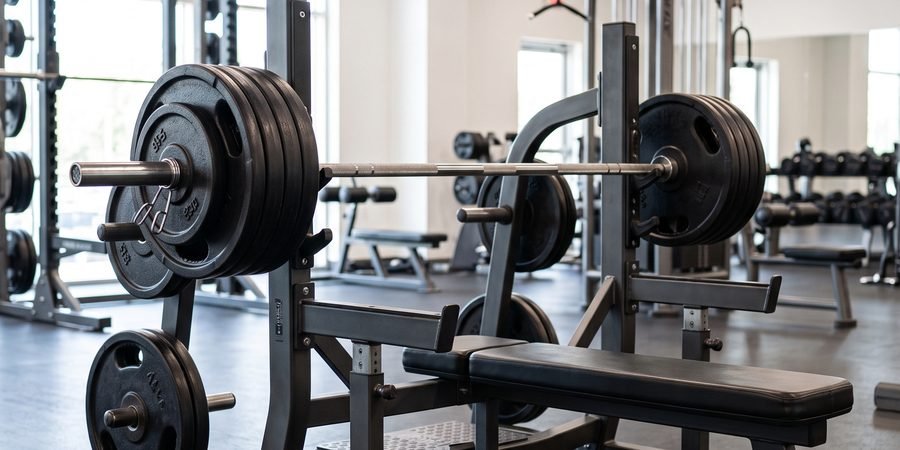
These are widely used bodyweight-ratio benchmarks for the flat barbell bench press, raw (no bench shirt or other equipment).
| Level | Men (×BW) | 80kg Man | Women (×BW) | 60kg Woman |
|---|---|---|---|---|
| Beginner | 0.50× | 40 kg | 0.30× | 18 kg |
| Novice | 0.75× | 60 kg | 0.45× | 27 kg |
| Intermediate | 1.00× | 80 kg | 0.60× | 36 kg |
| Advanced | 1.30× | 104 kg | 0.80× | 48 kg |
| Elite | 1.60× | 128 kg | 1.00× | 60 kg |
🧮 Check All Three Lifts at Once
Enter your bodyweight and lift to see your exact strength level and the kg needed for the next milestone.
Open Strength Standards Calculator →Deadlift Standards for Men & Women
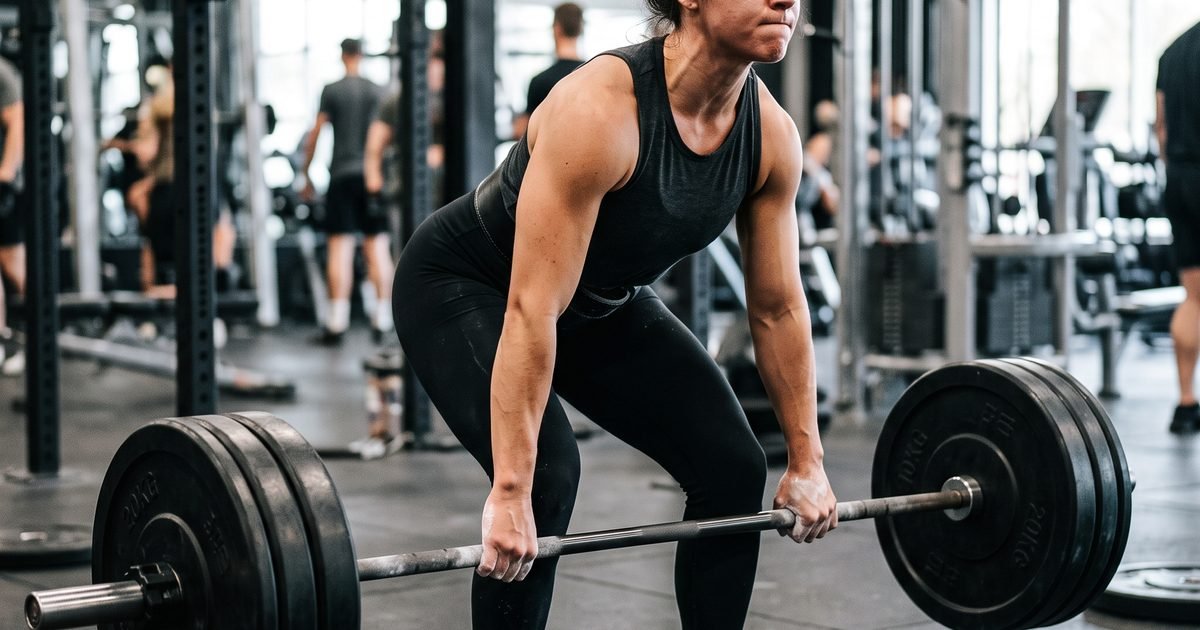
The deadlift uses the highest bodyweight multipliers of the three main lifts, reflecting the large amount of total muscle mass involved in a single pull from the floor.
| Level | Men (×BW) | 80kg Man | Women (×BW) | 60kg Woman |
|---|---|---|---|---|
| Beginner | 1.00× | 80 kg | 0.65× | 39 kg |
| Novice | 1.50× | 120 kg | 1.00× | 60 kg |
| Intermediate | 2.00× | 160 kg | 1.35× | 81 kg |
| Advanced | 2.50× | 200 kg | 1.75× | 105 kg |
| Elite | 3.00× | 240 kg | 2.15× | 129 kg |
Comparing Your Three Lifts
Because each lift has its own set of multipliers, it's entirely normal — even expected — to sit at different levels across your squat, bench and deadlift. A lifter might be Advanced on deadlift, Intermediate on squat, and Novice on bench, simply because of how their individual leverages, training history and muscle-fibre distribution interact with each specific movement pattern. Comparing lifts to each other using a simple ratio can help spot an obviously lagging lift worth extra attention:
- Bench-to-bodyweight below 0.75× alongside a strong squat and deadlift often points to under-trained pressing volume or chest/triceps/shoulder weakness.
- Deadlift close to or below your squat is unusual given the deadlift's typically higher multipliers, and can suggest weak hip hinge mechanics, grip strength, or lower-back endurance.
- All three lifts clustered closely together generally reflects a well-rounded, balanced training history across movement patterns.
Improving a Lagging Lift
If one lift is clearly behind the bodyweight standards for the others, a few evidence-based approaches tend to help most:
- Increase frequency on the lagging lift — training a movement pattern twice a week instead of once often accelerates technical and strength gains.
- Address the weak point directly — accessory work targeting triceps and shoulders for a stalled bench, or hamstrings and grip for a stalled deadlift.
- Review technique — a lift that looks "weak" is sometimes a technique issue rather than a true strength gap; small setup changes can unlock meaningful numbers.
- Be patient with the deadlift specifically — because it allows such high multipliers, catching up a lagging deadlift can take longer in absolute kg terms even at the same relative rate of progress.
Summary
Bench press standards run lowest of the three main lifts because of the smaller muscle groups involved, while deadlift standards run highest thanks to full posterior-chain recruitment. Most recreational lifters land between Novice and Intermediate on both lifts, with uneven progress across lifts being the norm rather than the exception. Use the tables as a rough benchmark and focus training attention on whichever lift is clearly behind the others.
This article provides general fitness information only and is not personalised coaching or medical advice.
Frequently Asked Questions
What is a good bench press for my bodyweight?
Using common bodyweight-ratio benchmarks, an intermediate male lifter benches around 1.0x bodyweight, with advanced closer to 1.3x. For an 80kg man that's roughly 80kg at intermediate and 104kg at advanced. The bench press typically has lower multipliers than the squat or deadlift because it relies on a smaller muscle group without help from the legs or hips.
What is a good deadlift for my bodyweight?
The deadlift generally has the highest bodyweight multipliers of the three main lifts. An intermediate male lifter deadlifts around 2.0x bodyweight, with advanced closer to 2.5x — roughly 160kg and 200kg respectively for an 80kg lifter. This reflects the deadlift's use of nearly the entire posterior chain in one lift.
Why is the deadlift usually the strongest of the three main lifts?
The deadlift starts from a dead stop with no stretch-reflex assistance, but it recruits more total muscle mass than the squat or bench press — hamstrings, glutes, spinal erectors, lats and grip all contribute. That broader muscle recruitment is the main reason deadlift bodyweight ratios tend to sit higher than squat or bench ratios at every strength level.
Should my bench press and deadlift be at the same strength level?
Not necessarily, and it's common for lifters to sit at different levels across lifts depending on limb length, training history and which movements they have prioritised. A lifter with long arms, for example, often finds the bench press comparatively harder and the deadlift comparatively easier than someone with a different build.
How often should I test my bench press and deadlift max?
Most structured training programs call for a true 1-rep max test only every 8-16 weeks, since frequent maximal testing adds fatigue and injury risk without meaningfully speeding up progress. Many lifters instead estimate their current max from a heavy set of 3-5 reps using a standard rep-max formula.