Squat Strength Standards by Bodyweight: Beginner to Elite
"How much should I be squatting?" is one of the most common questions in any gym — and the honest answer depends almost entirely on your bodyweight, not a fixed number. Strength standards solve this by comparing the weight you lift to your own bodyweight, producing a ratio you can measure yourself against. Here's exactly what beginner through elite looks like for the squat, for both men and women.
Contents
How the Squat Strength Ratio Works
Every strength-standards table is built on one simple calculation: the weight on the bar divided by your bodyweight, both measured in the same unit. That produces a multiplier — for example, squatting 120kg at an 80kg bodyweight gives a ratio of 1.5x. That multiplier is then matched against five commonly used performance bands: Beginner, Novice, Intermediate, Advanced and Elite. Because the ratio scales with bodyweight, a 60kg lifter and a 100kg lifter can both be classified "Intermediate" despite moving very different absolute loads — which is the entire point of using a ratio instead of a flat kg number.
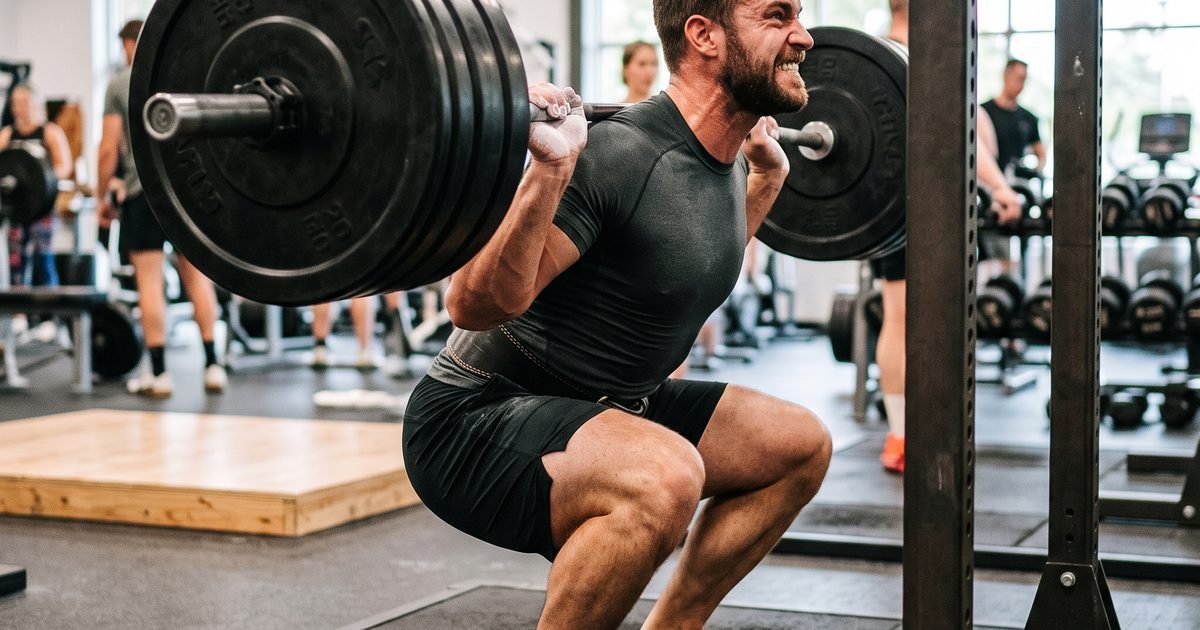
Squat Standards for Men (by Bodyweight Multiplier)
These multipliers are widely used bodyweight-ratio benchmarks for raw (unequipped) squatting. Multiply any bodyweight by the figure in the table to get an approximate kg target for that level.
| Level | Multiplier | Example: 80kg Lifter |
|---|---|---|
| Beginner | 0.75× | 60 kg |
| Novice | 1.25× | 100 kg |
| Intermediate | 1.70× | 136 kg |
| Advanced | 2.15× | 172 kg |
| Elite | 2.60× | 208 kg |
A lifter who has never trained typically starts below the Beginner line entirely — these bands describe a progression, not a pass/fail starting point. Most people who train consistently for a year or two with reasonable programming land somewhere between Novice and Intermediate.
🧮 Find Your Exact Level
Enter your bodyweight and squat to see your precise strength level and the kg needed for the next milestone.
Open Strength Standards Calculator →Squat Standards for Women (by Bodyweight Multiplier)
Women's standards use lower bodyweight multipliers than men's at every level, reflecting average physiological differences in muscle mass and fibre-type distribution between sexes. The same five-band structure applies.
| Level | Multiplier | Example: 60kg Lifter |
|---|---|---|
| Beginner | 0.50× | 30 kg |
| Novice | 0.90× | 54 kg |
| Intermediate | 1.25× | 75 kg |
| Advanced | 1.65× | 99 kg |
| Elite | 2.05× | 123 kg |
What Affects Where You Sit on the Scale
A strength ratio is a useful snapshot, but it's shaped by far more than just "how hard you train." A few of the biggest factors:
- Training age — how many consistent years you've spent under a barbell, not just how long you've had a gym membership.
- Limb length and build — shorter femurs relative to torso length tend to produce a mechanical advantage in the squat, independent of effort or programming quality.
- Bodyweight and body composition — because the ratio divides by total bodyweight, two lifters with identical muscle mass but different body fat levels will land at different ratios.
- Technique and depth — standards assume a consistent, full-depth squat; partial-range lifts inflate the number without reflecting comparable strength.
- Programming quality — consistent progressive overload over months and years outperforms sporadic, unstructured training by a wide margin.
Realistic Timelines Between Levels
Progress through the bands is not linear — early gains come fast as the nervous system adapts to a new movement pattern, then slow considerably as a lifter approaches their genetic strength ceiling. As a rough guide for a lifter training consistently with sound programming:
| Transition | Typical Timeframe |
|---|---|
| Untrained → Beginner | First few weeks of consistent squatting |
| Beginner → Novice | 2-6 months |
| Novice → Intermediate | 6-18 months |
| Intermediate → Advanced | 2-5+ years |
| Advanced → Elite | Many years of dedicated, well-programmed training |
Summary
Squat strength standards work by dividing the weight you lift by your bodyweight, then matching that ratio against beginner-through-elite bands that differ for men and women. Most recreational lifters sit somewhere between Novice and Intermediate, with Advanced and Elite reflecting years of focused, consistent training. Compare yourself against the table for a rough benchmark, but track your own progress over time as the more meaningful measure.
This article provides general fitness information only and is not personalised coaching or medical advice.
Frequently Asked Questions
What is considered a good squat for my bodyweight?
It depends on the bodyweight-multiplier band you fall into. Using common strength-training benchmarks, an intermediate male lifter squats around 1.5x bodyweight, while an advanced lifter is closer to 2x. For an 80kg man, that's roughly 120kg at intermediate and 160kg at advanced. Women's standards sit lower in absolute terms but follow the same relative progression through the beginner-to-elite bands.
What is an elite squat for a man?
Elite-level squatting under common bodyweight-ratio benchmarks sits around 2.5x bodyweight or higher for men — so roughly 200kg for an 80kg lifter. Very few recreational lifters reach this band; it typically reflects years of dedicated, well-programmed training or a background in competitive powerlifting.
Do squat strength standards differ for men and women?
Yes. Women's strength standards use lower bodyweight multipliers than men's at every level, reflecting average physiological differences in muscle mass and fibre distribution between sexes. The five-band structure — beginner, novice, intermediate, advanced, elite — stays the same, just with different ratio thresholds.
How long does it take to go from beginner to intermediate squat strength?
For most people training consistently with good form and progressive overload, moving from a beginner squat ratio to an intermediate one takes roughly 6-18 months, though this varies widely with training age, consistency, nutrition, and how close someone is to their genetic starting point for strength.
Should I compare my squat to bodyweight standards or just chase a number?
Bodyweight-ratio standards are most useful as a rough compass, not a scoreboard. A lifter's actual progress — whether their squat is trending up over months with sound technique — matters far more for long-term strength and injury-free training than matching a chart exactly.