High Protein Foods List: Why Protein Is Good for You
Chicken, lean beef, fish, eggs, Greek yoghurt, tofu, tempeh and lentils are some of the best high protein foods. Below is a table of typical protein amounts per serve, a chart comparing common foods, and plain explanations of why protein matters, how to spread it across the day and how to eat enough without spending a fortune.
Contents
High protein foods: the list
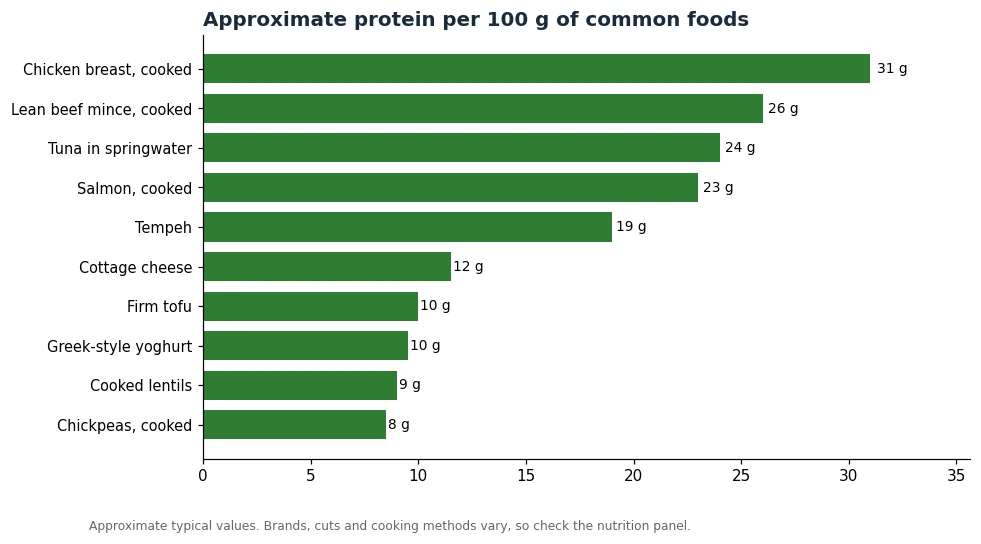
These are approximate protein amounts for typical serves, based on typical values in food composition data and product labels. Every brand is a bit different, so treat the numbers as a guide and check the nutrition information panel on what you buy.
| Food | Typical serve | Protein (approx.) |
|---|---|---|
| Chicken breast, cooked, skinless | 100 g | 31 g |
| Lean beef mince, cooked | 100 g | 26 g |
| Salmon fillet, cooked | 100 g | 22–25 g |
| Tuna in springwater | 95 g can | 20–24 g |
| Eggs | 2 large | 12–13 g |
| Greek-style natural yoghurt | 170 g tub | 15–17 g |
| Cottage cheese | 100 g | 11–12 g |
| Cow’s milk | 250 ml glass | 8–9 g |
| Cheddar cheese | 30 g | 7–8 g |
| Tempeh | 100 g | 18–20 g |
| Firm tofu | 100 g | 8–12 g |
| Cooked lentils | 1 cup (about 200 g) | 16–18 g |
| Chickpeas, cooked or canned | 100 g | 8–9 g |
| Peanuts | 30 g | 7–8 g |
| Almonds | 30 g | about 6 g |
Why protein matters
Protein is made of amino acids, which your body uses to build and repair muscle, skin, enzymes and hormones. It is also the most filling of the three macronutrients, so meals built around protein tend to keep you satisfied for longer than meals that are mostly refined carbohydrate. That is why protein often features when people are trying to manage their weight, and why it is useful in the rebuilding phase after training.
Most healthy Australian adults get enough protein without trying, particularly if they eat meat, fish, eggs or dairy. Where people fall short is usually in specific groups: older adults with poor appetite, people following restrictive diets, and some who are in a large calorie deficit. For recommended intakes, the best place to start is the Australian Government’s Eat for Health site, which publishes the Nutrient Reference Values. We deliberately do not quote a single number here because it varies with age, sex, pregnancy and health status.
Work out your own protein target
Enter your details to see an estimate based on your goal and activity level.
Open the protein calculator →Animal vs plant protein
Animal foods such as meat, fish, eggs and dairy provide all the essential amino acids in useful amounts, and are often called complete proteins. Most plant foods have a lower amount of at least one amino acid, but combining different sources across a day (for example legumes with grains, or tofu with rice) covers all the bases. Soy foods like tofu and tempeh are the exception, as they provide a good amino acid profile on their own.
In practice the bigger question is the whole food package. A bowl of lentil dahl brings fibre, iron and folate with its protein. Processed meats such as bacon and salami come with a lot of salt and saturated fat. Eat for Health suggests limiting processed meat and varying your protein foods through the week.
How to spread protein through the day
- Breakfast: two eggs on wholegrain toast, or Greek yoghurt with oats and nuts, or tofu scramble.
- Lunch: a tuna or chicken salad, a lentil soup or a chickpea and vegetable wrap.
- Dinner: a palm-sized portion of fish, lean meat, tofu or tempeh with vegetables and a wholegrain.
- Snacks: cottage cheese on crackers, a handful of nuts, a glass of milk, hummus with vegetable sticks.
There is no need to count every gram. If each main meal has a clear protein food on the plate, you are probably doing fine.
Budget-friendly protein
Protein does not have to mean expensive cuts. Eggs, canned tuna and sardines, dried or canned legumes, tofu, milk, plain yoghurt, oats, peanut butter and cheaper cuts of chicken such as thighs and drumsticks all deliver a lot of protein for the money. Buying legumes dried and cooking a batch at the start of the week is one of the cheapest options of all.
Reading labels and spotting the catch
The nutrition information panel lists protein per serve and per 100 g. Compare the per-100 g column when choosing between products, because serve sizes are set by the manufacturer and can be small. Be wary of products that call themselves high protein but arrive with a lot of added sugar or saturated fat, such as some bars, flavoured yoghurts and processed meats. A plain tub of yoghurt with fruit and nuts usually beats a dessert-style "protein" yoghurt on both nutrition and cost.
Three protein myths worth dropping
- "You must eat protein within 30 minutes of training." Total protein across the day matters far more than a short window.
- "Plant protein is incomplete, so vegetarians struggle." A varied plant diet, especially with soy foods, covers all the essential amino acids.
- "More protein always means more muscle." Training and total energy intake drive muscle gain. Protein past what your body can use is simply burned for energy.
What about protein powders and shakes?
Powders are a convenient way to top up your intake, but they are a supplement, not a necessity. Most people who eat a varied diet do not need them. If you are curious about shakes, see our guide on how many protein shakes a day is reasonable. Look for products tested by a third party and check the label for added sugars.
Frequently Asked Questions
What are the best high protein foods?
Chicken breast, lean beef, fish such as salmon and tuna, eggs, Greek yoghurt, cottage cheese, tofu, tempeh, lentils and chickpeas are all good sources. Eggs, canned tuna, legumes and milk are among the cheapest.
How much protein is in 100 g of chicken breast?
About 31 g for cooked, skinless chicken breast. Raw chicken has less protein per 100 g because it contains more water.
What are good vegetarian high protein foods?
Eggs, dairy, tofu, tempeh, lentils, chickpeas, beans, nuts, seeds and wholegrains. Soy foods such as tofu and tempeh have a particularly good amino acid profile.
Do I need protein powder?
Not usually. Most people who eat a varied diet get enough from food. Powders can help if your appetite is low or you struggle to reach your needs, but they are optional.
How much protein should I eat per day?
It depends on your age, sex, activity, pregnancy and health. The Nutrient Reference Values on the Australian Government Eat for Health site are the best starting point, and a dietitian can tailor advice.
Is too much protein bad for you?
For most healthy people, a high-protein diet from a variety of foods is not a problem, but people with kidney disease or other conditions may need to limit protein. Check with your doctor if you are unsure.